Nativity Eve arrives, as it always does, quietly.
The world does not pause. Work continues. Trains still run. The hours move forward with little regard for the mystery that is already unfolding in the Church. This morning, while I am at work, the Divine Liturgy of St. Basil will be celebrated. The Church will pray. The great arc of salvation—from creation to incarnation—will be proclaimed. Christ will be offered sacramentally, even as He is about to be born in a cave.
And I will not yet be there.
Later today, when work is finished, my partner and I will take the train to Edinburgh. We have taken a small apartment for two nights so that we might be close to the Orthodox Community of St. Andrew—close to the Church, close to the place where Christ will be welcomed liturgically into the world. I am grateful for this in a way that is difficult to express. Work does not always permit the time I would like to spend there, nor the fuller involvement I long for in the life of that community. To be able to go at all feels like a gift.
And yet, today begins not with arrival, but with absence.
The Liturgy That Goes On Without Me
There is something humbling—perhaps even instructive—about knowing that the Church is already praying without me.
The Divine Liturgy of St. Basil is not brief. It is expansive, cosmic, and unhurried. It recounts the whole history of God’s saving work: creation, fall, covenant, incarnation, cross, resurrection, and the promise of the Kingdom to come. It reminds us, again and again, that salvation is not a moment, but a movement—God’s condescension toward us.
St. Basil writes with clarity and awe of this descent:
“He emptied Himself, taking the form of a servant, that He might raise us up to Himself.”
This prayer is being offered today whether I am present or not. Christ does not wait for my schedule. The Church does not pause until I arrive. The mystery unfolds in obedience and faithfulness, not in response to my availability.
And perhaps that, too, is part of the lesson.
On the Road, Not Yet There
There is something deeply fitting about being on the road on Nativity Eve.
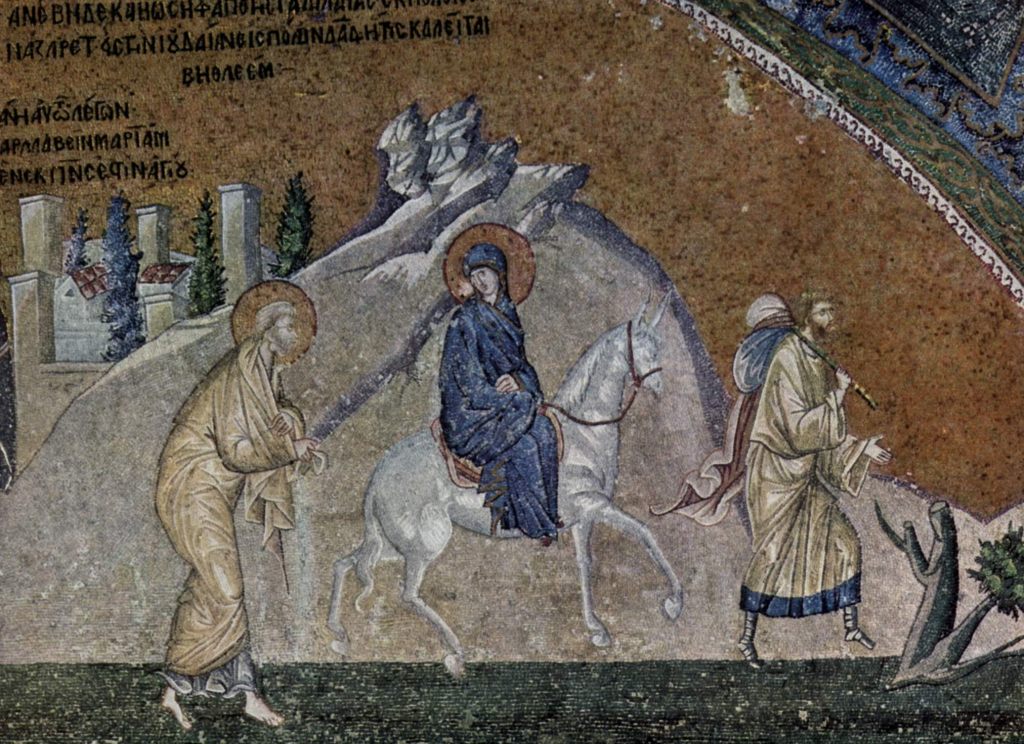
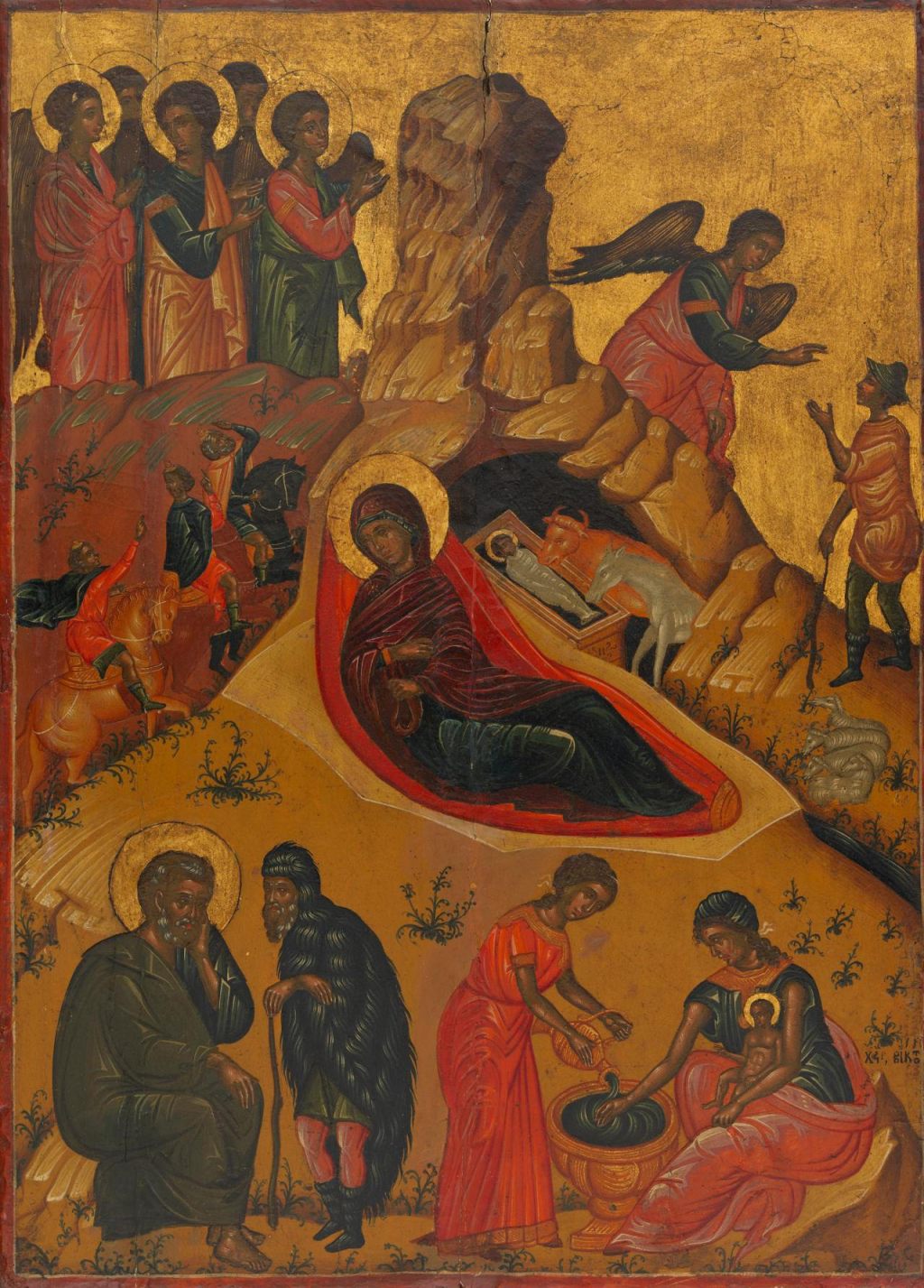
Christ Himself comes into the world amid journeys and dislocations: Mary and Joseph traveling to Bethlehem; shepherds leaving their fields; Magi beginning a long journey whose end they do not yet see. Not everyone arrives at the same moment. Not everyone stands at the manger at once.
St. Gregory the Theologian proclaims:
“Christ is born—glorify Him. Christ comes from heaven—go out to meet Him.”
Go out to meet Him.
Not necessarily be there already.
To be on the way, then, is not a failure of devotion. It is part of the pattern of salvation itself. God comes to meet us even as we move, haltingly and imperfectly, toward Him.
Desire as Belonging
In recent posts, I have written about waiting, patience, and remaining—about the slow work of faith when nothing seems to be happening. Today adds another layer: longing.
I long to be present at the Liturgy. I long to be more rooted in the life of the Church. I long to offer myself more fully, more faithfully, than I often manage to do. These longings do not disappear simply because I am prevented from acting on them immediately.
St. Maximus the Confessor offers a quiet reassurance:
“The one who desires God has already begun to possess Him.”
This is not an excuse for absence, nor a replacement for participation. But it is a reminder that God is not bound by the narrow limits of our circumstance. Desire itself, when shaped by love and obedience, becomes a form of orientation—of belonging.
The Church as Home, Not Achievement
Perhaps what I am learning, slowly, is that the Church is not something I achieve through perfect attendance or ideal circumstances. She is not a reward for having arranged life correctly. She is a home that remains, prays, and waits—even when I am delayed.
Today, the Church prays St. Basil’s words on my behalf. Tonight, I will travel toward her doors. Tomorrow, God willing, I will stand within her walls and greet the Nativity not as a spectator, but as one who has been gathered again.
Christ does not enter the world because we are ready. He enters because He is faithful.
A Quiet Joy
There is joy in this day—not the loud joy of completion, but the quieter joy of anticipation. Joy in movement. Joy in belonging. Joy in knowing that Christ comes whether I am early or late, strong or tired, perfectly attentive or painfully distracted.
He comes anyway.
And tonight, as I travel toward the place where His birth will be proclaimed, I pray only to arrive—not in haste or presumption—but with gratitude.
 Epektasis
Leave a comment