Waiting has never come naturally to me. Patience, still less so. I am a long way from its mastery—if mastery is even the right word.
I am no longer as quick to anger as I once was, say in my teenage years, but there are still many moments when I must catch myself, bite my tongue, and quietly pray that no further damage be done. There are also moments—more than I would like—when I fail to catch myself at all. What follows is often familiar: a long interior reckoning, replaying the moment, weighed down by guilt, measuring myself against an image of who I believe I should be.
I have always tended toward perfection in all that I do. It is a hard and humbling road to learn, again and again, that perfection does not belong to me. It belongs to God alone. And yet, this lesson is not learned once. It is learned slowly, painfully, over time—often through failure.
St. Isaac the Syrian writes with characteristic gentleness:
“This life has been given to you for repentance; do not waste it in vain pursuits.”
Repentance, here, is not merely sorrow for sin, but a reorientation of desire—a learning to remain with God even when we are unfinished, unpolished, and unsettled.
Waiting Without Fireworks
I suspect I am not alone in the waiting game.
Who among us has not kept vigil—through a long evening of prayer, or an early morning winding through the prayer rope—only to rise again to another ordinary day, another week or month, feeling a touch of spiritual dryness? Who has not longed, at some point, for a voice; a nudge on the shoulder; a vision; a guiding light? Fireworks, for want of a better word?
And who has not, in quieter moments, been tempted to look elsewhere—for something quicker, clearer, more effective?
The Scriptures are honest about this longing. Even the righteous wait. Even the faithful ache.
St. Paul writes:
“If we hope for what we do not see, we wait for it with patience.” (Romans 8:25)
But patience here is not passive endurance. It is not resignation. The Greek word hypomonē carries the sense of remaining under—of staying present, standing firm, refusing to flee when nothing seems to be happening.
Simeon, Anna, and the Shape of Waiting
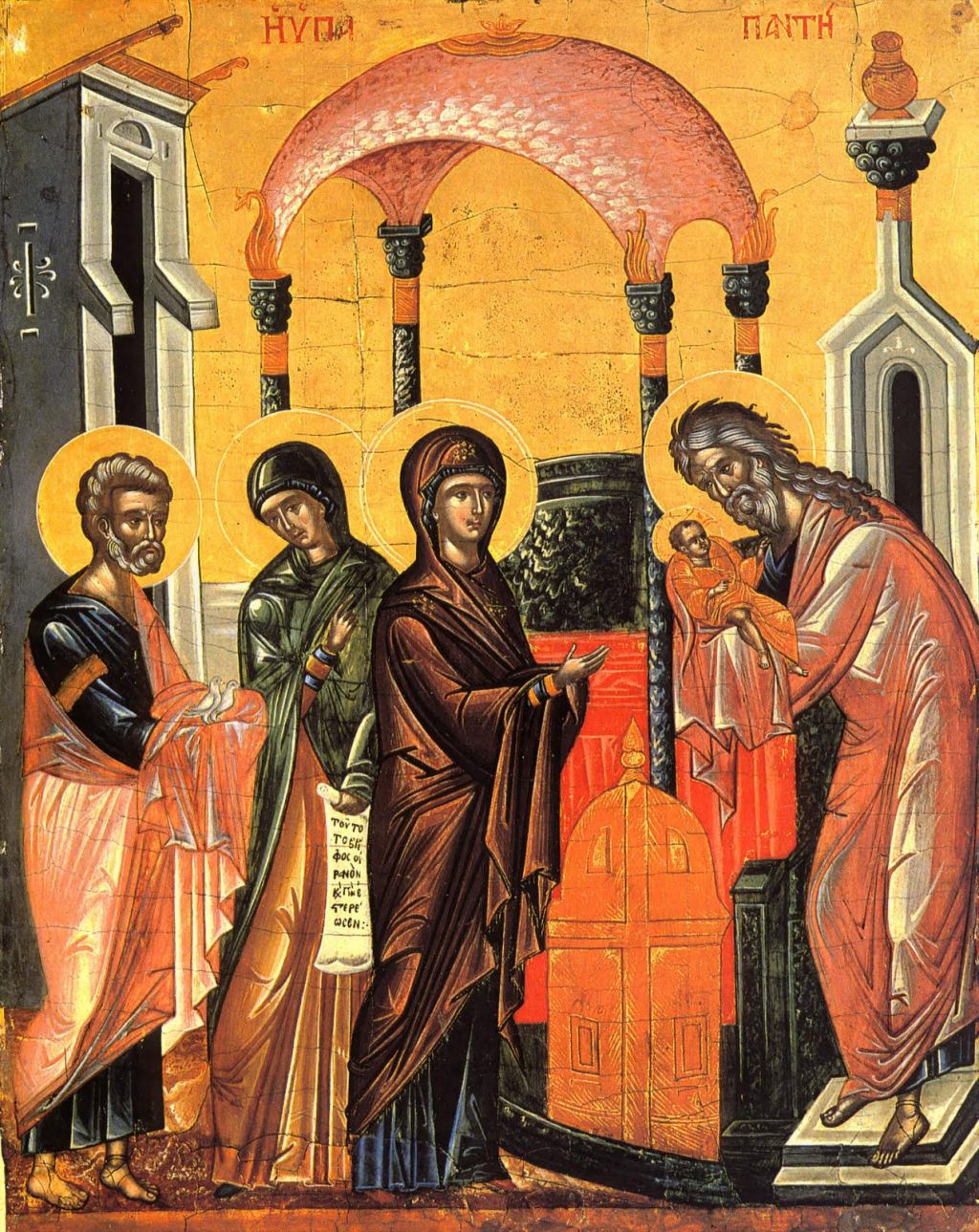
In the Gospel according to Luke, we meet two figures who embody this kind of waiting: Simeon and Anna.
Simeon is described simply as “righteous and devout, waiting for the consolation of Israel” (Luke 2:25). Anna, we are told, “did not depart from the temple, worshipping with fasting and prayer night and day” (Luke 2:37).
Neither is said to have visions. Neither performs miracles. They wait. They remain. And when Christ finally comes into their lives, He comes not with spectacle, but as a Child, silent and small.
St. Maximus the Confessor teaches that God does not reveal Himself all at once, lest we mistake illumination for possession. Growth in Christ is gradual, because love must be learned freely:
“The mystery of Christ is not exhausted by those who partake of it, but remains ever new.”
Waiting, then, is not a failure of spiritual life. It is the spiritual life—stretched out over time.
Time as the Place of Encounter
One of the quiet deceptions of modern life is the belief that time is an obstacle. We speak of “wasted time,” “lost time,” time that must be optimized or conquered. But in the Christian life, time is not an enemy—it is the very place where salvation unfolds.
St. Gregory of Nyssa, writing of the soul’s endless journey into God, insists that growth does not end, even in eternity. Desire itself is purified and expanded:
“This truly is the vision of God: never to be satisfied in the desire to see Him.”
If this is so, then our present waiting—our slowness, dryness, incompleteness—is not outside the life of grace. It is already participation in it.
Learning to Remain
Perhaps what we seek, beneath the longing for signs and certainty, is reassurance that we are doing enough. That our efforts matter. That God sees us.
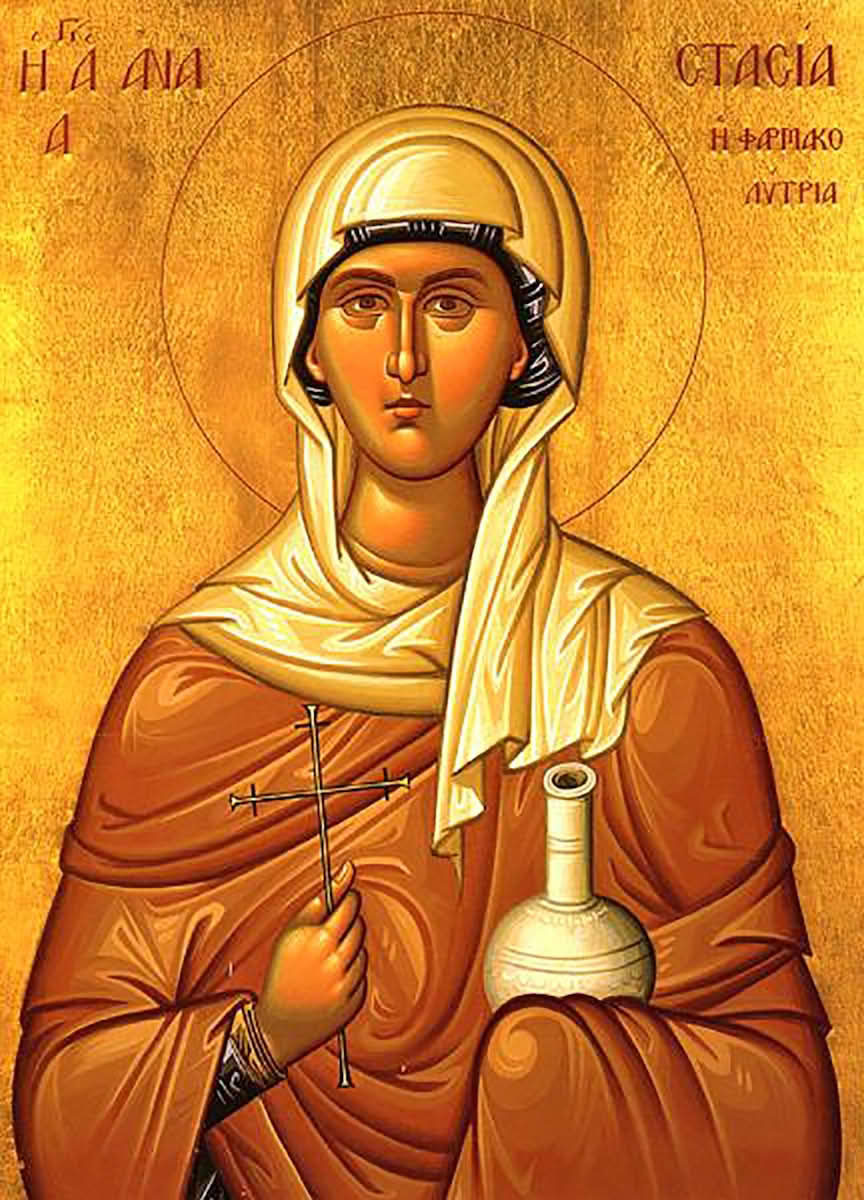
But Saint Anastasia, whom we remembered yesterday, reminds us that love does not measure itself by visible success. It stays. It visits. It remains present where love is needed.
So too with waiting. To remain with God when prayer feels empty, when progress seems imperceptible, when we are painfully aware of our own imperfections—this is not wasted time. It is fidelity.
St. Isaac again offers quiet counsel:
“Do not seek perfection, for you will find it only in humility.”
And humility, more often than not, looks like waiting.
A Closing Thought
I am still learning patience. Still learning not to flee from unfinishedness. Still learning to entrust my longing for perfection to the One who alone is perfect.
Perhaps the work given to us is not to arrive, but to remain—to wait with God, rather than waiting for Him.
And perhaps, in time, we will discover that He has been waiting with us all along.

 Epektasis
Leave a comment